Next-GEN flood preparedness

A Waxeye case study
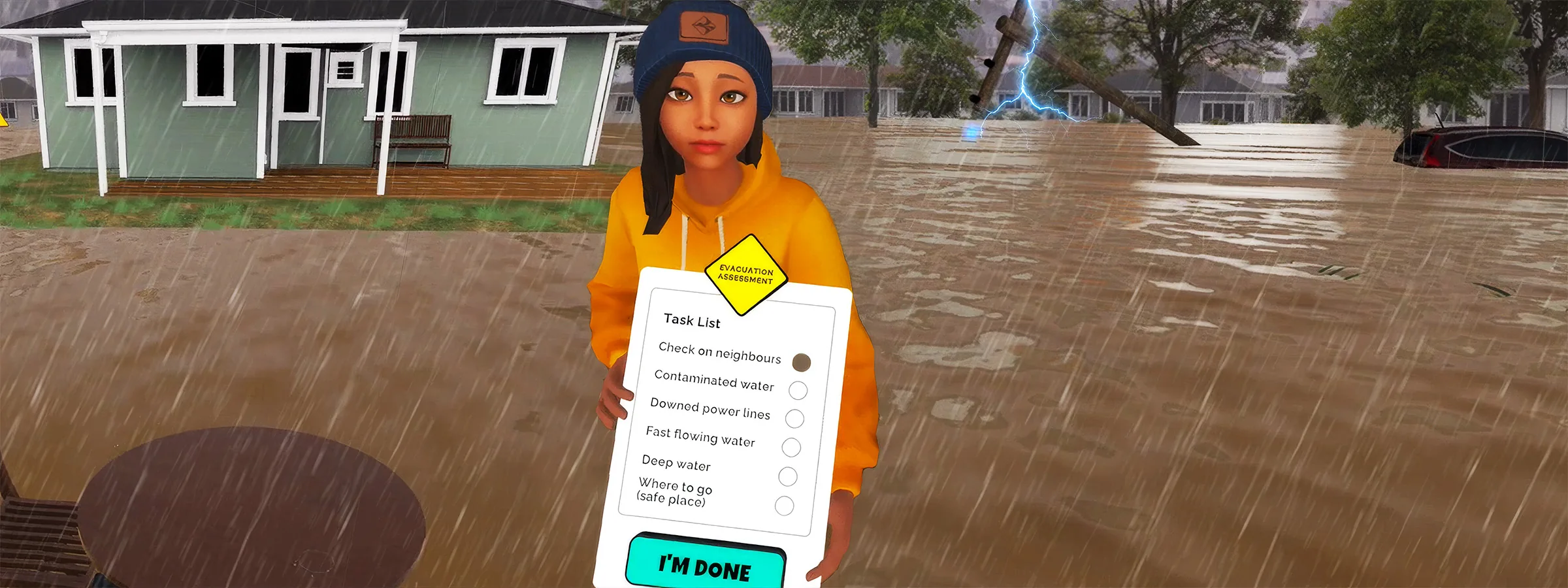
Kahu, the guide, holds an evacuation task list in a flooded street, with a sparking power line down behind her
Next-GEN flood preparedness

To help communities better prepare for floods, Tauranga City Council partnered with Waxeye to create an immersive VR experience that teaches people what to do before and during a flood emergency.

Launched
2024
Length
6 minutes
Headset
Meta Quest 3
Languages
Te reo Māori and English
Audience
Ages 10–16
Understanding improved
77%

The challenge

Flood risk awareness in Tauranga was low, especially among the most vulnerable, and traditional campaigns weren’t engaging people or changing what they did. The council wanted an inclusive, bilingual way to help residents understand the risk and act on it, starting with 10- to 16-year-olds, who could carry what they learned home to their whānau.
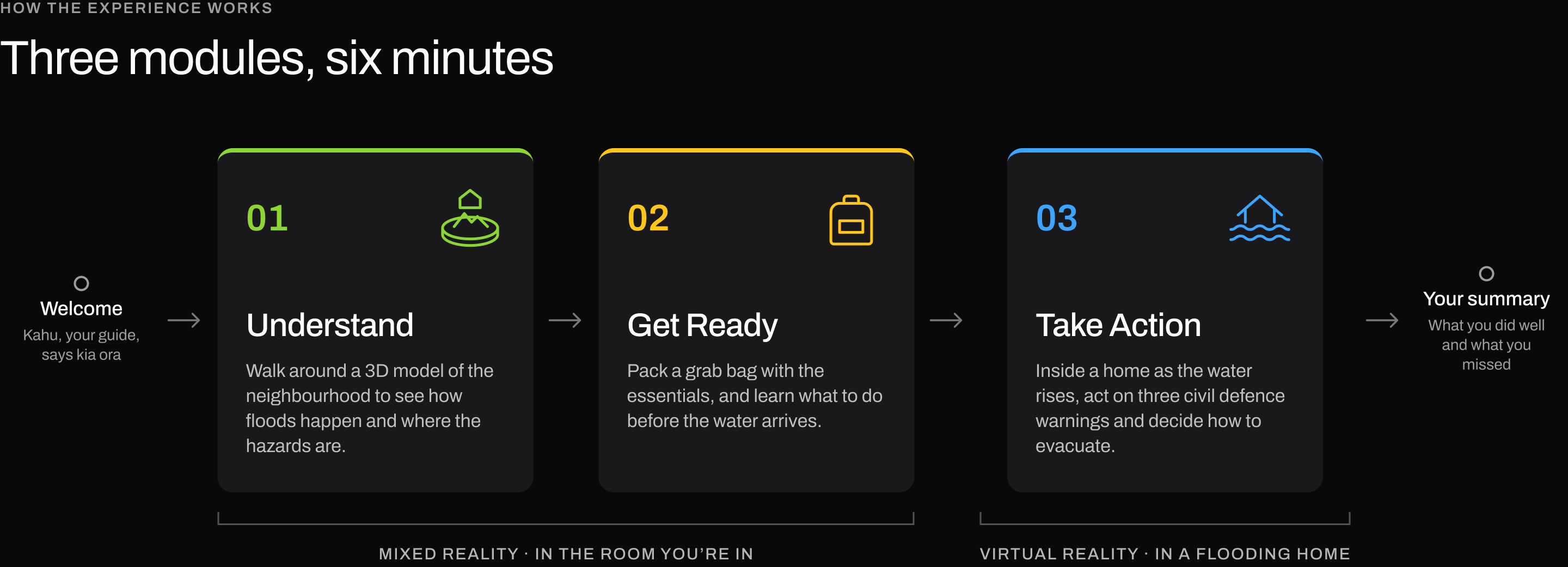
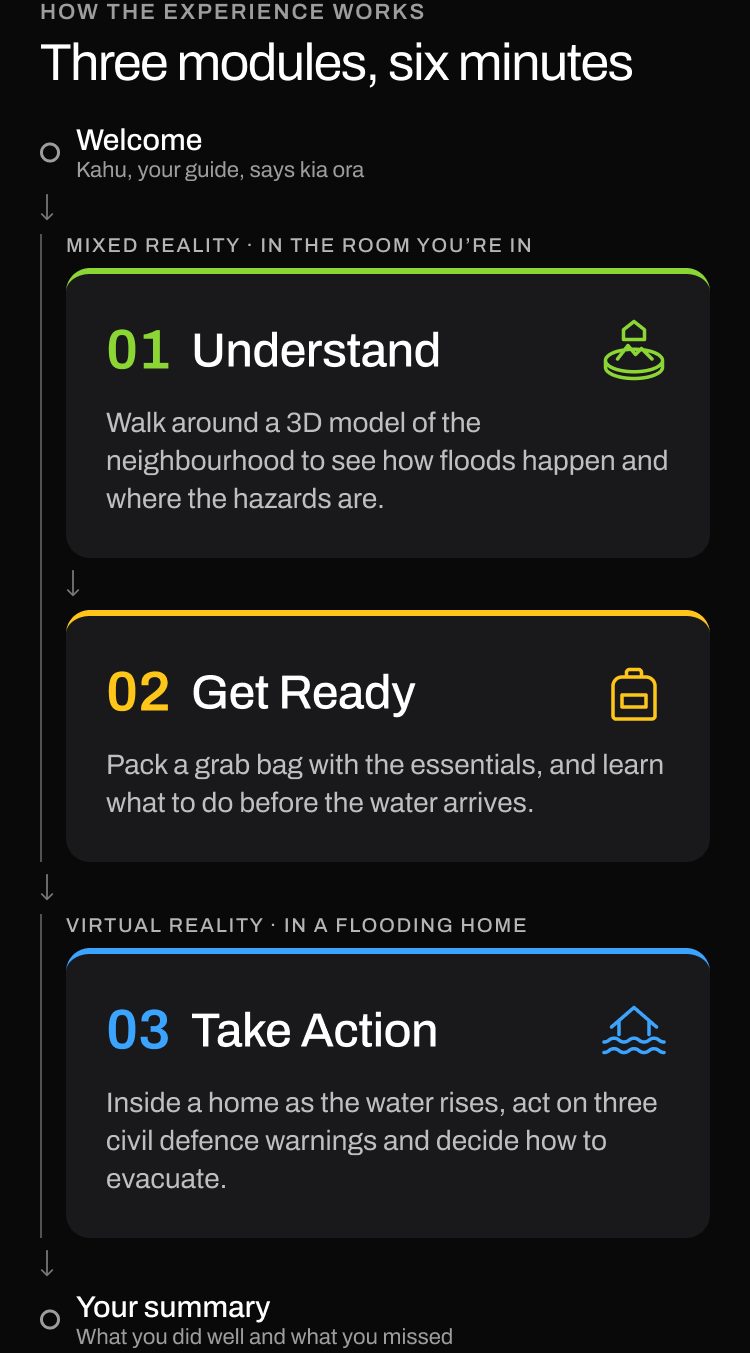
How the experience works: three modules in six minutes. Kahu, your guide, welcomes you. Module 1, Understand: walk around a 3D model of the neighbourhood to see how floods happen and where the hazards are. Module 2, Get Ready: pack a grab bag with the essentials and learn what to do before the water arrives. Both are in mixed reality, in the room you’re in. Module 3, Take Action, is in virtual reality inside a flooding home: as the water rises, act on three civil defence warnings and decide how to evacuate. It ends with a summary of what you did well and what you missed. How the experience works: three modules in six minutes. Kahu, your guide, welcomes you. Module 1, Understand: walk around a 3D model of the neighbourhood to see how floods happen and where the hazards are. Module 2, Get Ready: pack a grab bag with the essentials and learn what to do before the water arrives. Both are in mixed reality, in the room you’re in. Module 3, Take Action, is in virtual reality inside a flooding home: as the water rises, act on three civil defence warnings and decide how to evacuate. It ends with a summary of what you did well and what you missed.

It’s made for the whole community, with a focus on 10- to 16-year-olds, who take what they learn home to their families. The six-minute experience runs on Meta Quest 3 in English and te reo Māori, and Tauranga City Council takes it to schools, libraries and community hubs, so people can prepare before the next flood rather than learn during it.
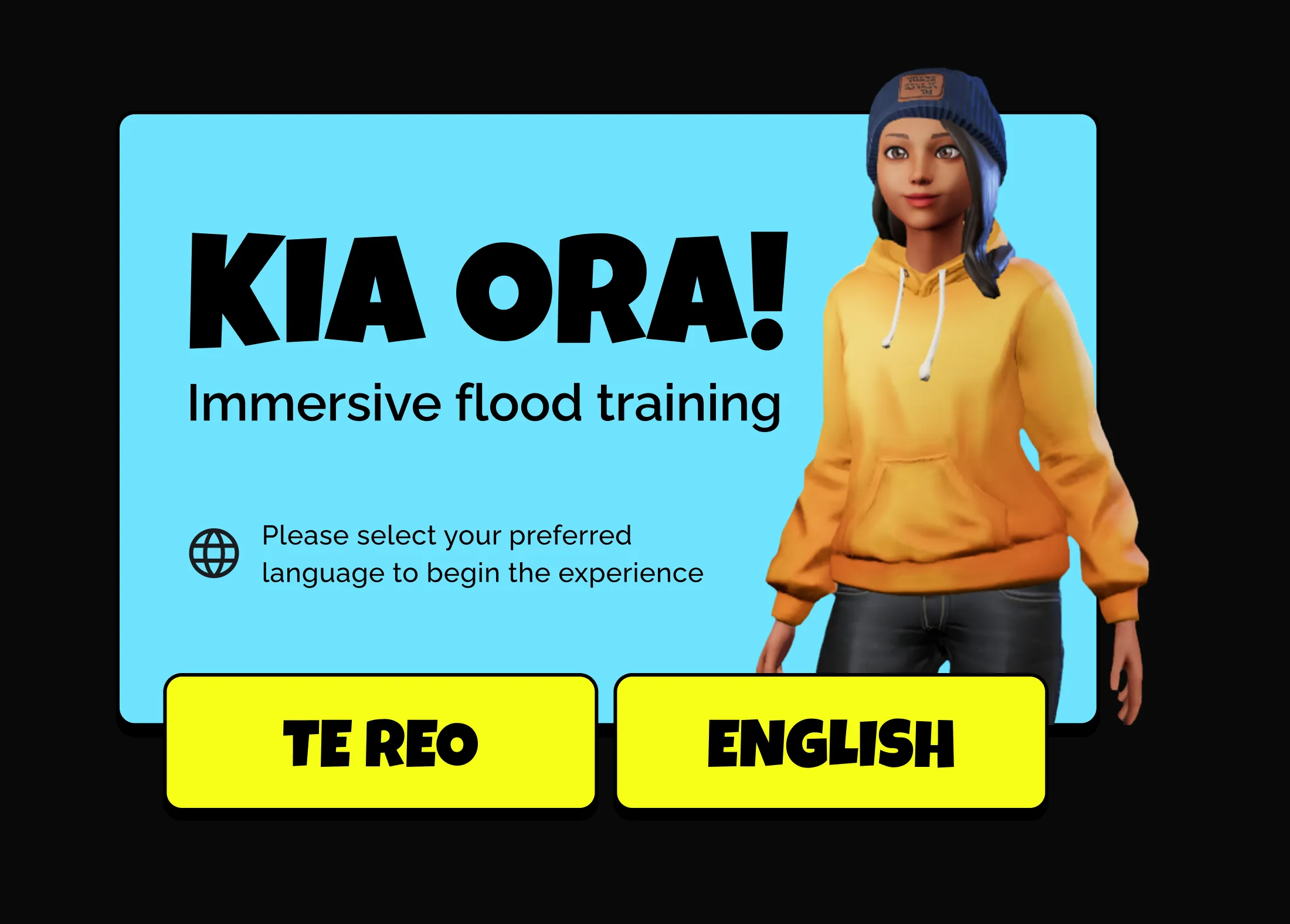
The welcome screen: Kahu, the guide, stands beside a Kia ora! panel reading Immersive flood training, with buttons to choose te reo or English

Kia ora! Every session starts with Kahu, and a choice of te reo Māori or English. From there Kahu stays at your side as a guide, keeping things moving and adding a little pressure along the way. Questions like “What should we do?” and “What do we need to pack?” put you in the right frame of mind: this is an emergency.

Why this one is personal

“During the 2023 Auckland Anniversary floods, my mother-in-law, Shirley, was at home as the water came in. She didn’t know what to expect, what to pack, or what to do. Most of us wouldn’t.

So when Tauranga City Council asked us for a flood education tool, those three gaps became the three modules: a map to understand the risk, a grab bag to get ready, and a flood you can live through before it ever happens for real.”

Paul James Co-founder and Creative Partner, Waxeye

Shirley tells her story in the film below.
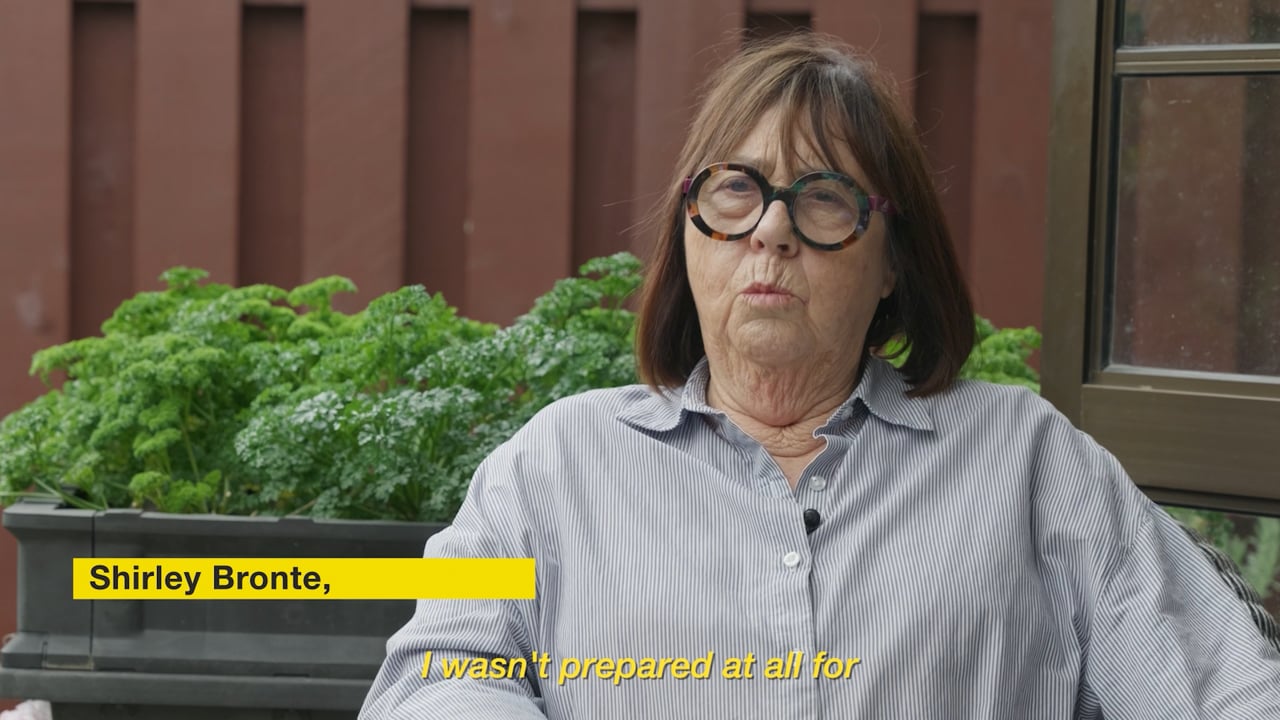
Shirley’s story: Next-GEN flood preparedness preview image

From creative concept to headset

Each module started as a sketch in our creative treatment for the council. Here’s how they turned out.
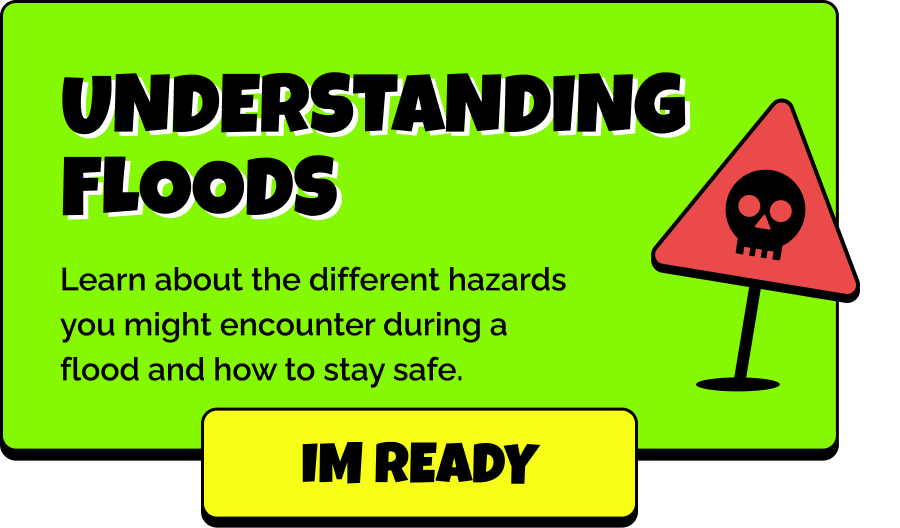
The Understanding floods title card in the headset: learn about the different hazards you might encounter during a flood and how to stay safe, with a skull hazard sign and an I’m ready button
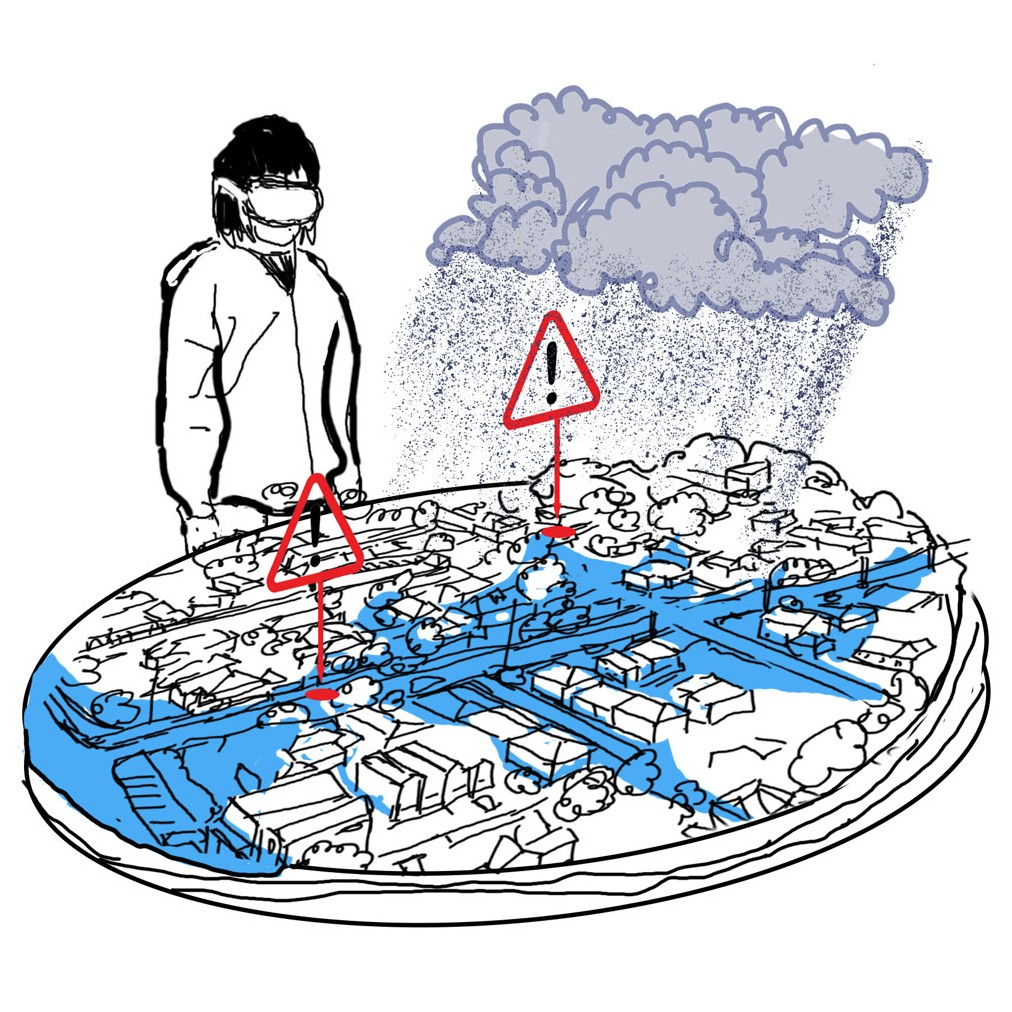
Concept sketch Pencil sketch of a person in a headset looking down at a round tabletop model of a flooding neighbourhood, with hazard signs rising from it
In the headset
Understand. A 3D model of the neighbourhood shows how floods happen and where the hazards are.
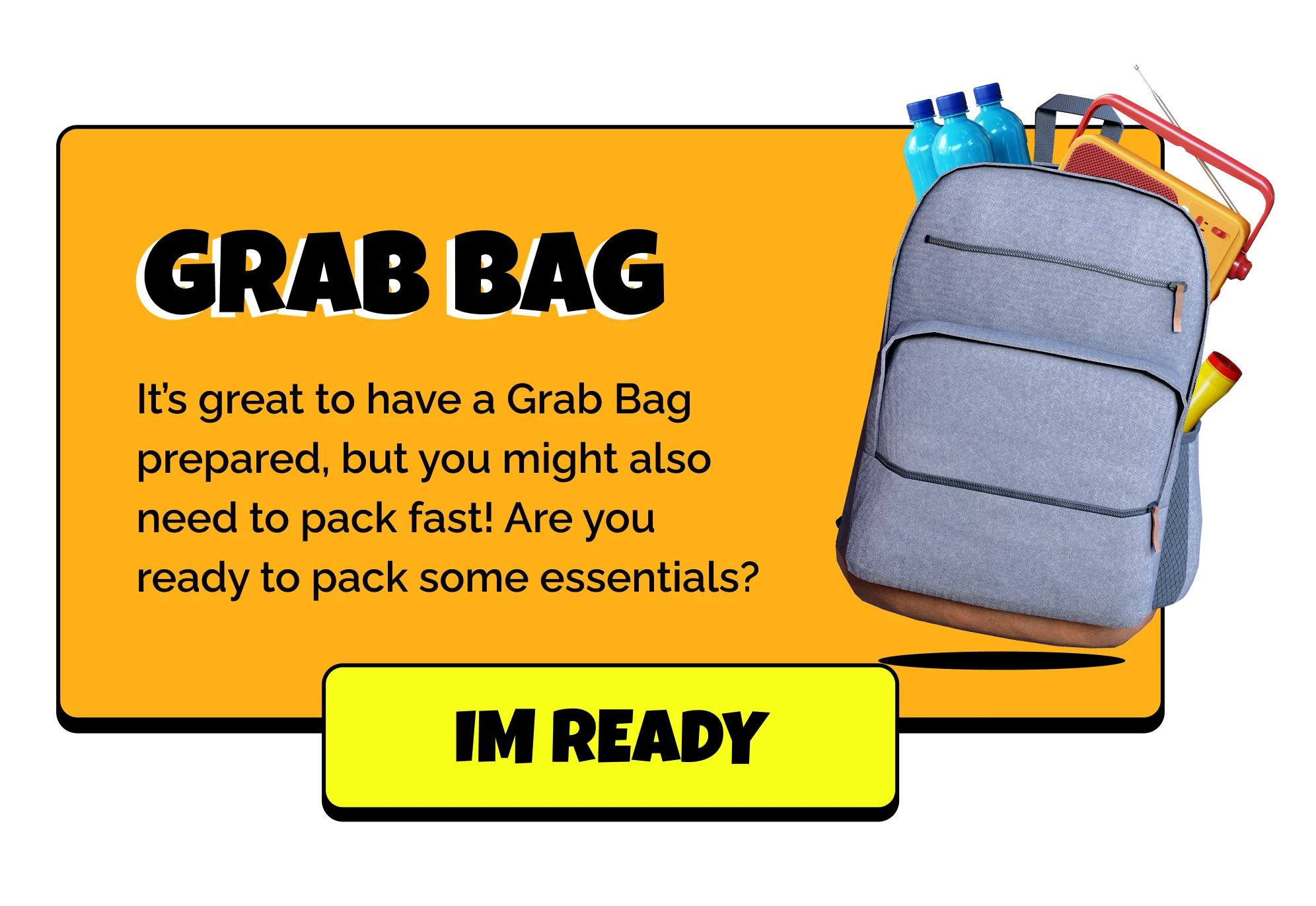
The Grab Bag title card in the headset: it’s great to have a grab bag prepared, but you might also need to pack fast, so are you ready to pack some essentials? A backpack stuffed with water bottles, a radio and a torch sits beside an I’m ready button
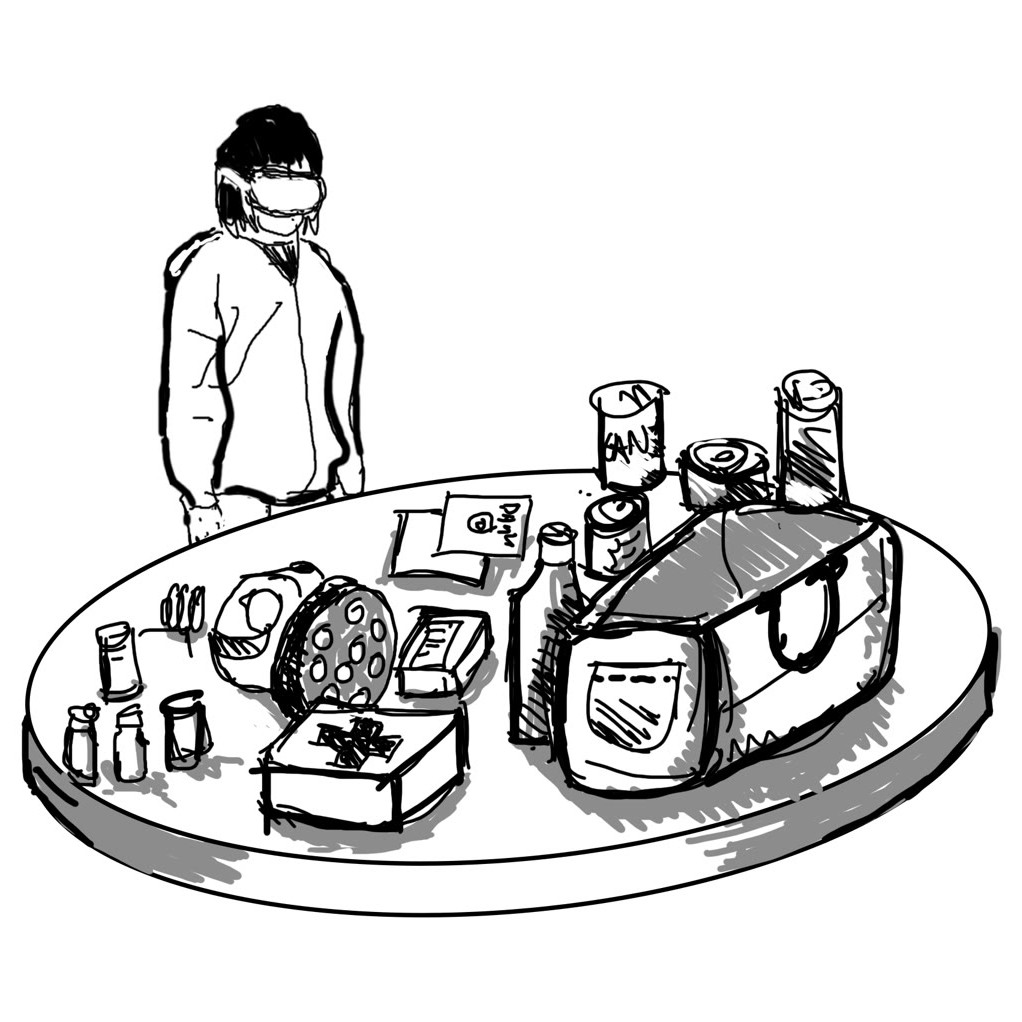
Concept sketch Pencil sketch of a person in a headset beside a round table holding a bag and emergency supplies
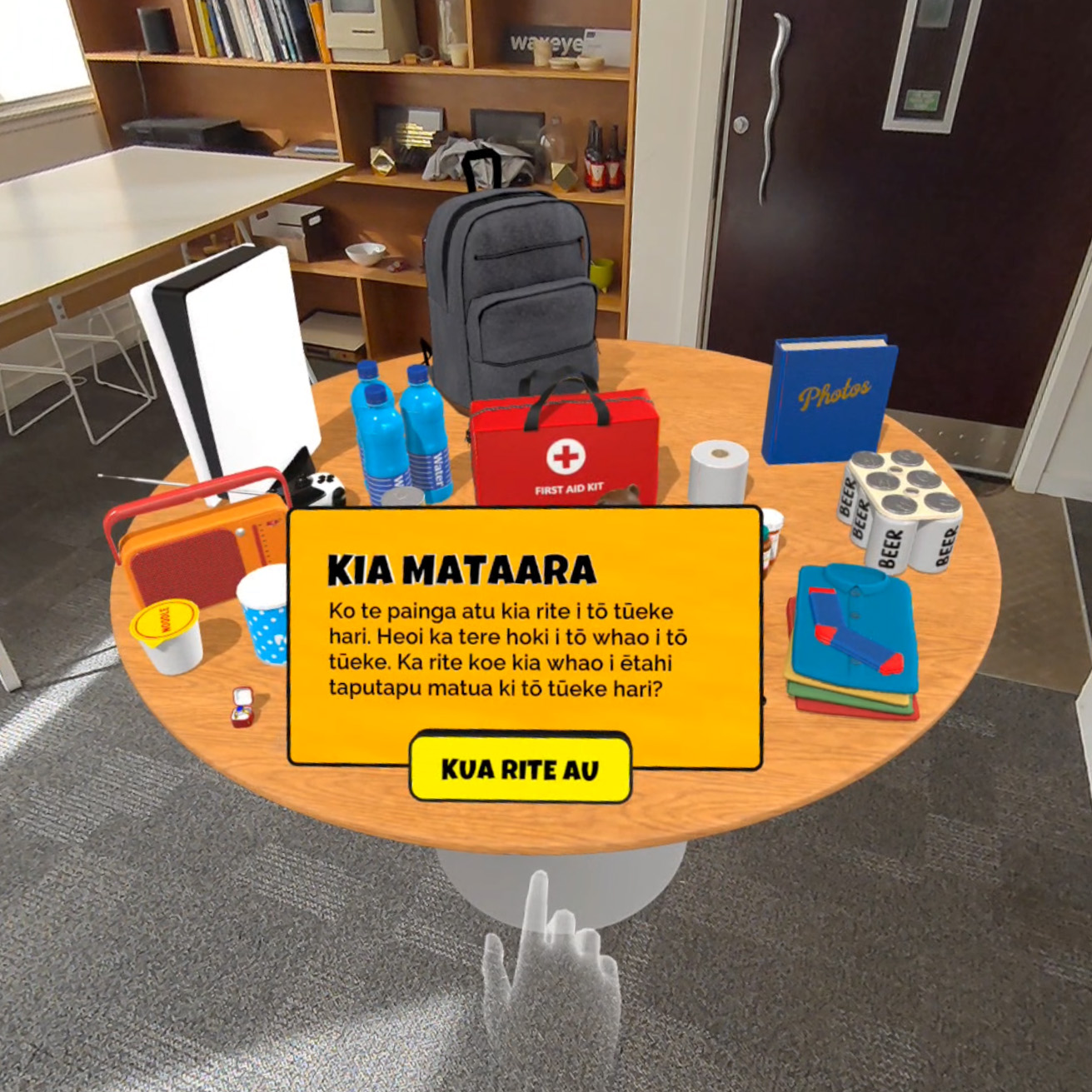
In the headset In mixed reality, a backpack, water bottles, a first aid kit, a radio and other supplies sit on a real table, with a title card in te reo Māori reading Kia mataara
Get Ready. Packing the grab bag against the clock, shown here in te reo Māori.
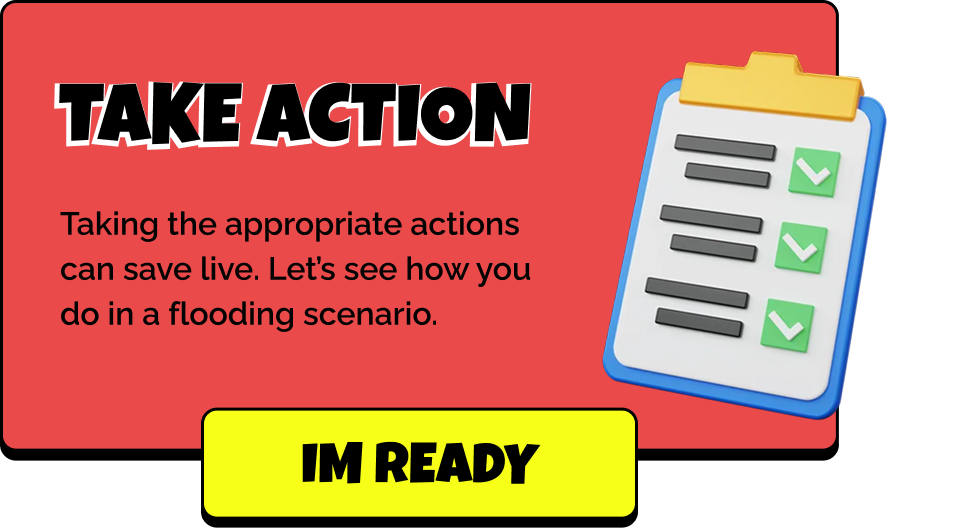
The Take Action title card in the headset: taking the appropriate actions can save lives, so let’s see how you do in a flooding scenario, with a clipboard of ticked tasks and an I’m ready button
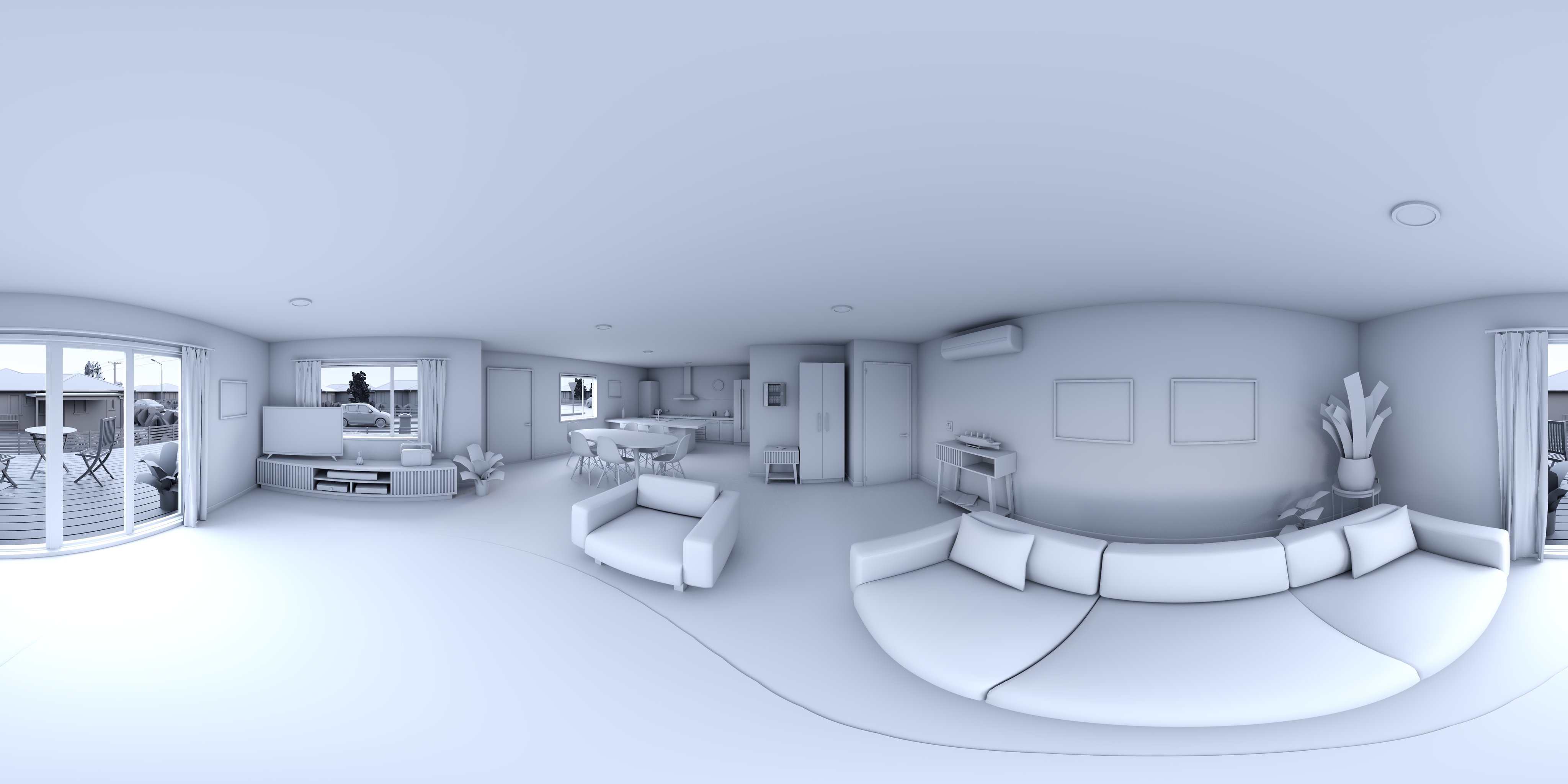
360 layout
A 360-degree view of the untextured grey living room: sliding doors to a deck, a TV unit, an open-plan kitchen and dining area, and a curved sofa
In the headset
Take Action. The living room was blocked out in grey first, then dressed and flooded. Inside, Kahu works through the task list with you as the warnings come in.
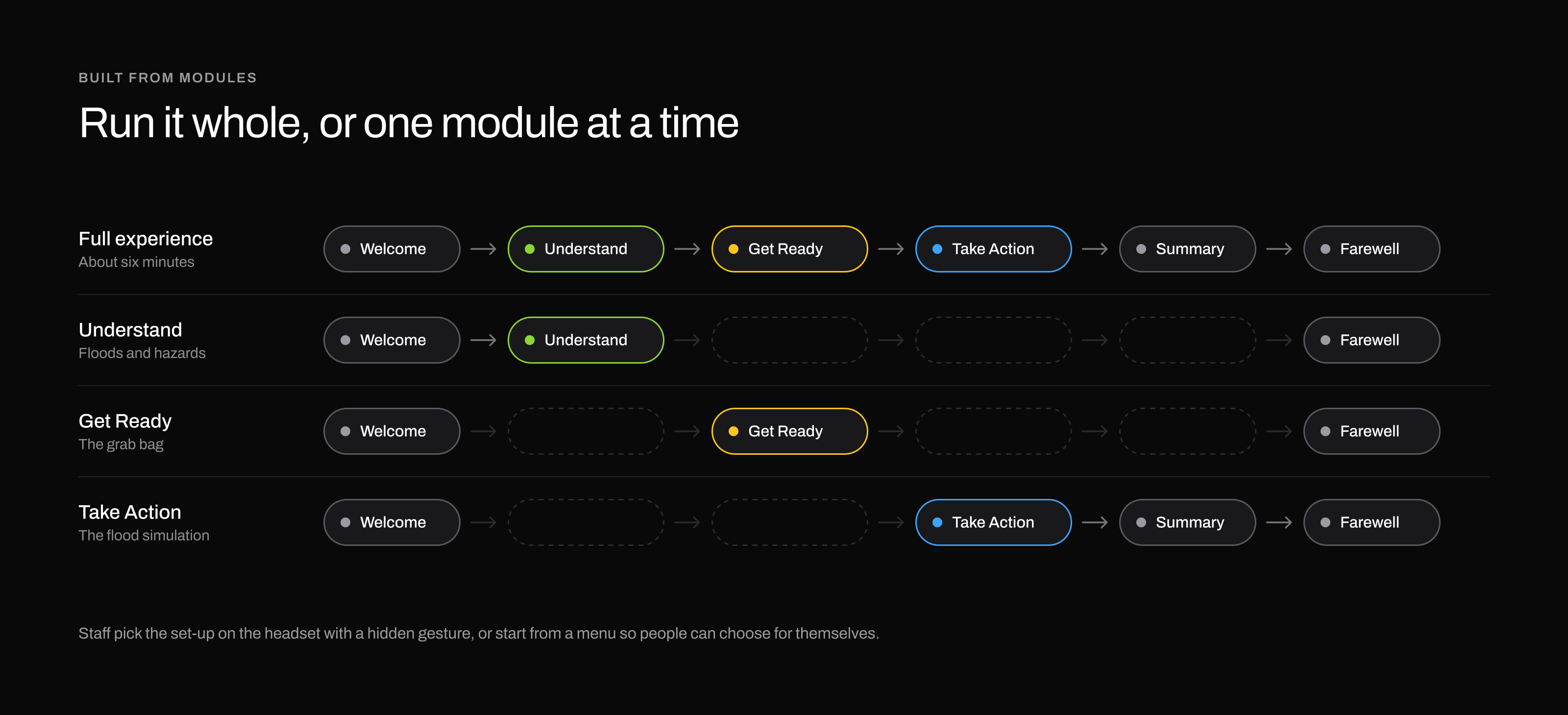
Built from modules: run it whole, or one module at a time. The full experience, about six minutes, runs Welcome, Understand, Get Ready, Take Action, Summary and Farewell. Each module can also run on its own between Welcome and Farewell: Understand for floods and hazards, Get Ready for the grab bag, or Take Action for the flood simulation, which keeps its Summary. Staff pick the set-up on the headset with a hidden gesture, or start from a menu so people can choose for themselves.
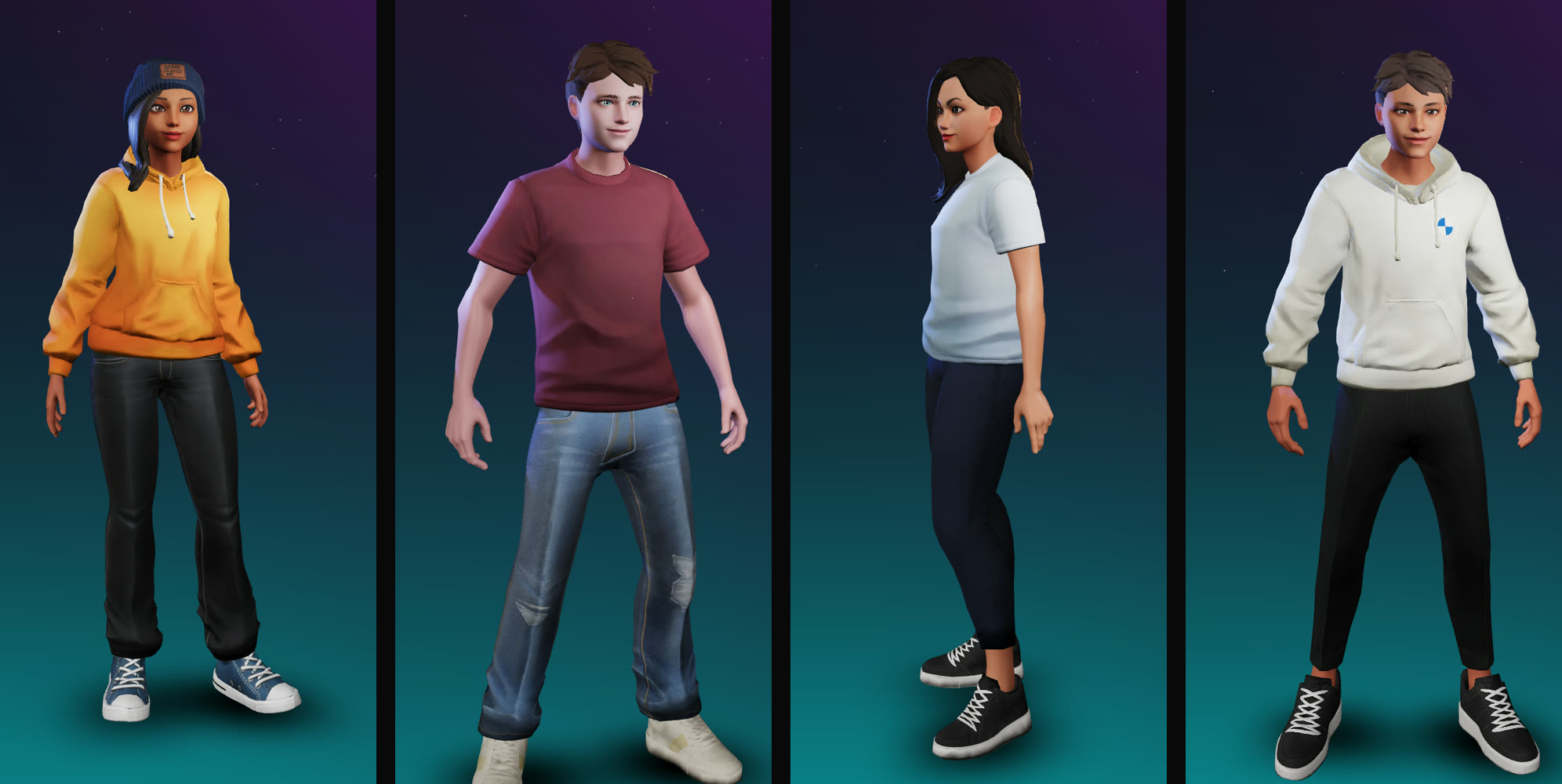
Four early 3D character options standing side by side: a young woman in a yellow hoodie and beanie, a young man in a red t-shirt, a young woman in a white t-shirt, and a young man in a white hoodie
Kahu. Our guide, far left, was chosen from four wardrobed Ready Player Me characters in the creative treatment.

How we designed it

Stylised, not photoreal
Super-realism costs money, strains the headset and, most of all, crowds out the learning. We pitched the look where it feels convincing without getting in the way of the message.
Start in the room you’re in
The first two modules run in mixed reality, so the hazard map and grab bag sit on a real table in a real room. The advice feels grounded, and people ease into the flood rather than being dropped into it.
The table becomes the floor
To cross into virtual reality, the table holding the grab bag sinks and becomes a rug as the living room builds around you. One world turns into the other, with no menus and no fade to black.
Stand still, stay safe
The experience is designed for someone standing in one spot, so nobody walks into a classmate or a library shelf. Bigger moves happen by teleport.
Bring the task to the user
You can’t roll up rugs or lift curtains in a headset. So when you spot a hazard like the power box, it comes to you, and you flick the main switch yourself: a small physical action that helps the lesson stick.
Built from modules
Councils can run the full six minutes or a single module, to suit the venue and the time they have.

Results

What 660+ participants said

84%
enjoyed the experience
77%
said their understanding of flood hazards has improved
78%
said this style of immersive education is effective

In-headset survey, April 2025 to October 2026