Revolutionising butchery training
A Waxeye case study
Many apprentice butchers learn best with their hands, not from a textbook. Skills4Work asked us to build a way of learning that suits them.
- Client
- Skills4Work
- Learners
- Apprentice butchers
- Modules
- Seven, on a structured learning path
- Animals
- Cattle, pigs, chickens and sheep
- Interaction
- Hand gestures
- Delivery
- Classroom and workplace visits
The challenge
Skills4Work is New Zealand’s only butchery training provider, and it holds the Dyslexia-Friendly Quality Mark from Ako Aotearoa. For years it heard the same thing from its apprentices. They struggled in the classroom and with the reading and writing that came with it. Butchery is a hands-on trade that attracts hands-on people, and Skills4Work found that nearly two-thirds of its apprentices learn best by doing rather than by reading or listening. Textbook-based training held many of them back.
“I’m very passionate about ensuring that hands-on, kinaesthetic learners have every opportunity to be able to learn, grow and develop in their roles and in their vocation.”
- 2/3
- of Skills4Work’s apprentices learn best hands-on
- 7
- interactive VR modules on a structured learning path
- 46
- headsets, 1 in every butchery trainer’s kit

The idea
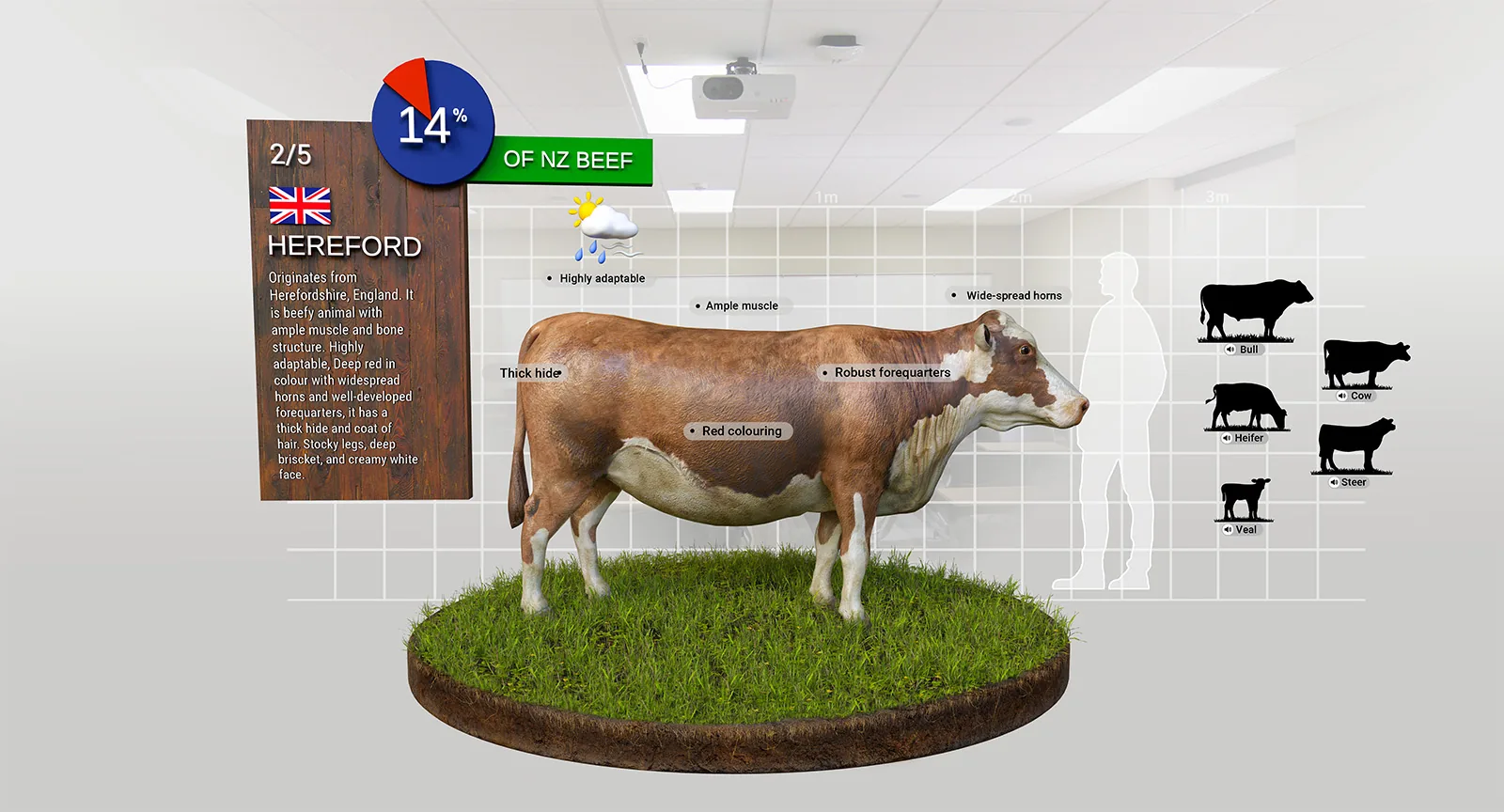
We built an immersive VR training experience that lets trainees learn by seeing and doing. They stand next to life-size animals of different breeds, walk around them, and then learn about the carcass and its cuts.
How the experience works
One path, four animals
- 01
On the farm
Why farming matters in Aotearoa, then trainees choose an animal.
- Learn: NZ farming overview
- Learn: Animal overview
- Cattle
- Pigs
- Chickens
- Sheep
- 02
Livestock
Life-size animals, swiped through like choosing a character.
- Learn: Breed overview
- Play: Swipe through the breedsAngus, Hereford, Friesian and more
- Quiz: Breeds quiz
- Learn: Summary
- 03
Anatomy
The animal peels back, layer by layer.
- Learn: Four layersSurface, muscle and prime cuts, skeleton, organs
- Quiz: Find the parts
- Learn: Results summary
- 04
Cuts
From the farm gate to the butchery bench.
- Learn: Transport and the abattoir
- Play: Prime cuts game
- Play: Sub-prime cuts game
- Learn: Results summary
Repeated for cattle, pigs, chickens and sheep
- Learn
- Play
- Quiz
From creative treatment to headset
After an overview of farming in Aotearoa, the seven modules cover three areas, livestock, anatomy and cuts, for each of the four animals. Each mixes short lessons with hands-on play and quizzes, and each started as a frame in our creative treatment for Skills4Work.
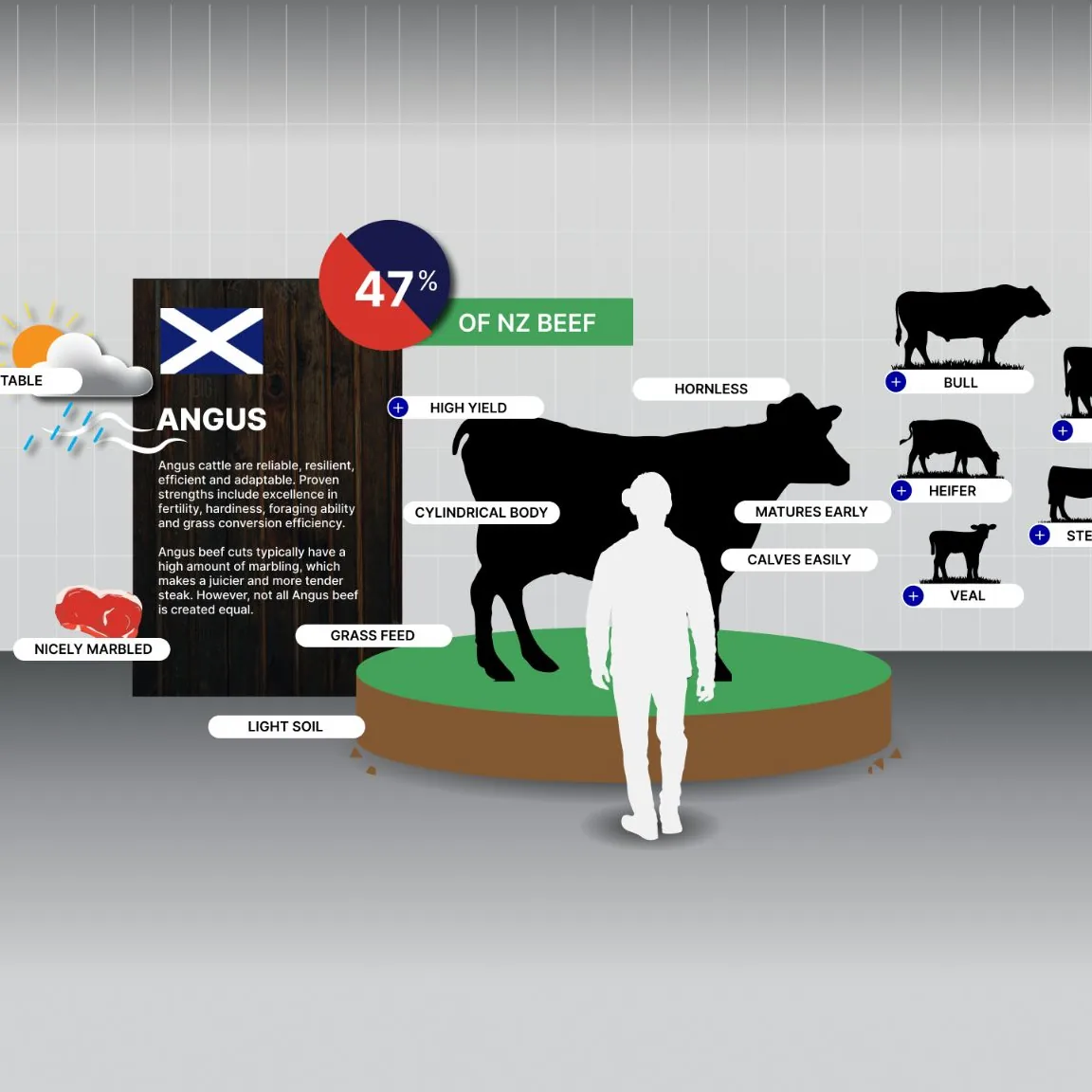
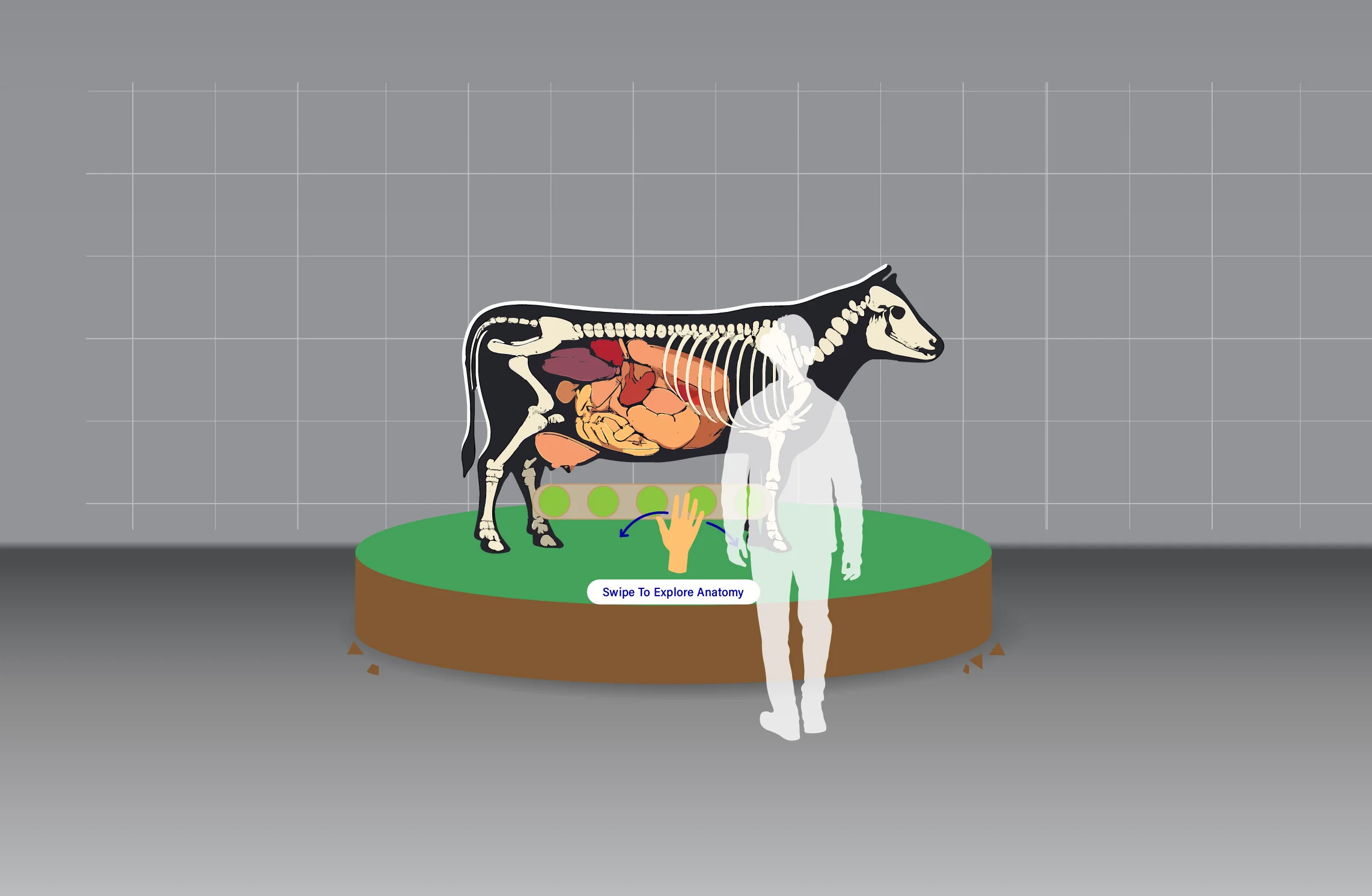
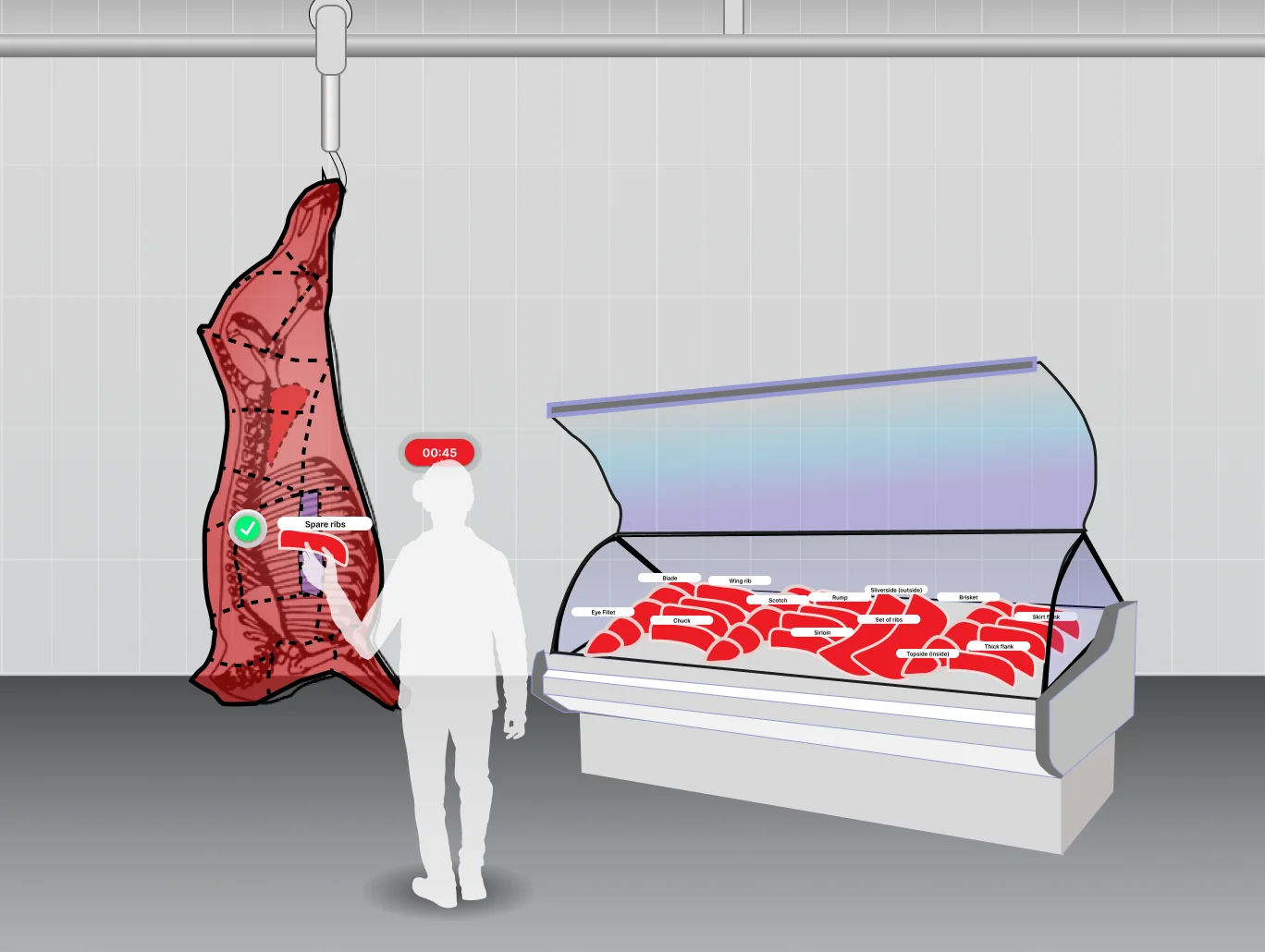
How we designed it
Results
What trainees and tutors said
- Lifelike
- is how trainees describe it
- Clearer
- trainees understood the material better than when they read it
- Connected
- tutors say it links theory to practical benchwork
“I would definitely recommend using it for more training.”
The work has also raised Skills4Work’s profile in the industry. On a trip to Europe, the team saw how their programme compared.
“What we were doing here in New Zealand with the VR technology … we were ahead of the game, not only in Aotearoa, but also in the world.”
Tamai Roff has called the programme “a bold step forward for vocational education in Aotearoa”, and wrote about it for the Global Meat Alliance. Next, Skills4Work is exploring more modules and assessment in VR.
“We interviewed approximately six suppliers, and we felt that we aligned really well with Waxeye’s vision.”